
Las Posadas is a traditional religious and cultural celebration observed each year from December 16 through December 24, mainly in Mexico and other parts of Latin America, as well as in some communities in the United States. The celebration reenacts the biblical journey of Mary and Joseph as they searched for shelter before the birth of Jesus. Las Posadas combines prayer, community gatherings, music, and festive traditions, helping families and neighborhoods prepare spiritually and joyfully for Christmas.
The name Las Posadas means “the inns” in Spanish, referring to the places where Mary and Joseph were refused lodging before the birth of Jesus. The tradition is rooted in Roman Catholic belief and is based on stories from the Gospel of Luke. Over time, it became an important Christmas custom in Mexico and Central America, blending religious devotion with local culture and community participation.
Las Posadas usually takes place over nine nights, which represent a novena, or nine days of prayer. Each night features a procession that reenacts Mary and Joseph’s journey to Bethlehem. In many communities, children dress as angels or biblical figures and carry candles or images of Mary and Joseph. The group walks through the neighborhood, stopping at selected homes to ask for lodging through traditional songs and prayers. The hosts symbolically refuse lodging until the final stop, where Mary and Joseph are welcomed inside.
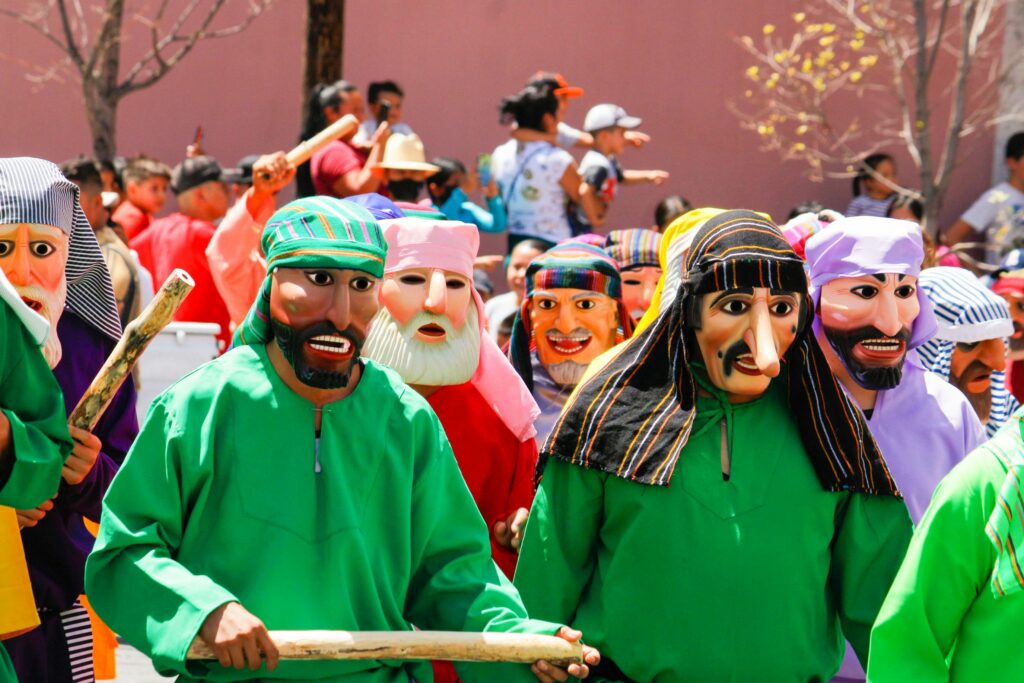
Rogelio Villanueva from Pexels.com
Once lodging is granted, the evening turns into a joyful celebration. Families and neighbors gather to pray, eat, and spend time together. Traditional foods commonly served during Las Posadas include tamales, ponche (a warm fruit punch), and buñuelos, which are sweet fried pastries. These foods reflect the warmth and hospitality that Mary and Joseph were seeking and that the hosts now offer to the visitors.
A highlight of many Las Posadas celebrations is the piñata, which is often shaped like a seven‑pointed star representing the Star of Bethlehem. Children take turns breaking the piñata, which is filled with candy, fruit, and small toys. The piñata symbolizes joy and reward after perseverance, reinforcing lessons of faith, patience, and community. In some places, the celebration concludes with an evening Mass or additional prayers at a church.
While Las Posadas traditions vary by region, the meaning remains the same. The celebration emphasizes faith, kindness, and togetherness, reminding participants of the importance of welcoming others and helping those in need. Today, Las Posadas continues to be an important cultural and religious tradition that brings families and communities together during the Christmas season.
To learn more about Las Posadas, check out Britannica.com