
Día de los Muertos, or Day of the Dead, is a traditional holiday primarily celebrated in Mexico and in some parts of Latin America and the United States. It is observed each year on November 1 and November 2. Unlike many traditions that focus on mourning, Día de los Muertos is a joyful celebration that honors deceased loved ones and remembers them with respect, love, and happiness. The holiday reflects the belief that death is a natural part of life and that the dead continue to remain spiritually connected to the living.
Día de los Muertos has its roots in ancient Indigenous civilizations of Mesoamerica, including the Aztec, Maya, Toltec, and Olmec peoples. These cultures believed that death was not the end of existence but rather a continuation of life in another form. They viewed the afterlife as a journey, and families helped guide the spirits of the dead by offering food, water, and tools. When Spanish colonizers arrived in the 16th century, Indigenous traditions merged with Roman Catholic holidays such as All Saints’ Day and All Souls’ Day, which fall on November 1 and 2. This blending created the modern form of Día de los Muertos that is still celebrated today.
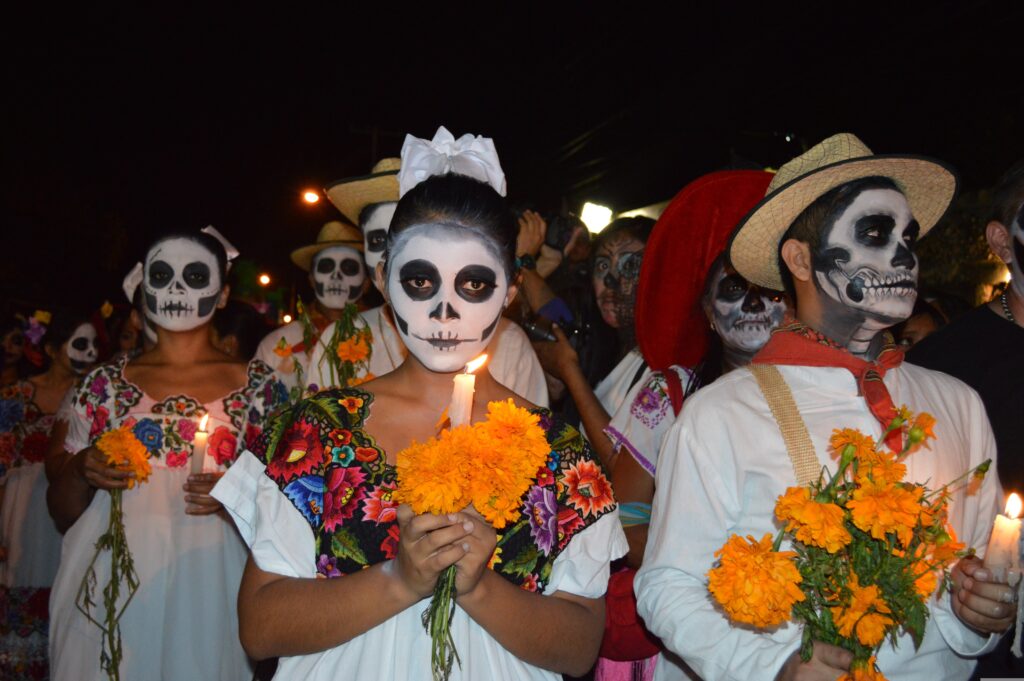
One of the most important traditions of Día de los Muertos is the creation of ofrendas, or altars. Families build these altars in their homes or at gravesites to welcome the spirits of deceased relatives. Ofrendas usually include photographs of the dead, candles, marigold flowers, incense, and the favorite foods or drinks of the departed. Each item has symbolic meaning. For example, candles represent light to guide the spirits, marigolds are believed to help lead souls back with their scent and color, and water is placed on the altar so spirits can refresh themselves after their journey.
Food also plays a key role in the celebration. Traditional items include pan de muerto, a sweet bread often shaped with bone-like designs, and calaveras, or sugar skulls, which are sometimes decorated with names. These foods are first offered to the spirits and later enjoyed by family members, symbolizing the connection between the living and the dead. Families may also prepare special meals and gather together to share stories and memories of loved ones who have passed away.
Many people celebrate Día de los Muertos by visiting cemeteries to clean and decorate graves. Music, prayers, and storytelling are common, creating a peaceful and loving atmosphere rather than a sad one. The holiday often includes colorful decorations, face paint resembling skulls, and images of La Catrina, a skeleton figure that has become a national symbol of Mexico. In recognition of its cultural importance, Día de los Muertos was named a UNESCO Intangible Cultural Heritage of Humanity in 2008.
To learn more about Dia De Los Muertos check out Britannica.com