
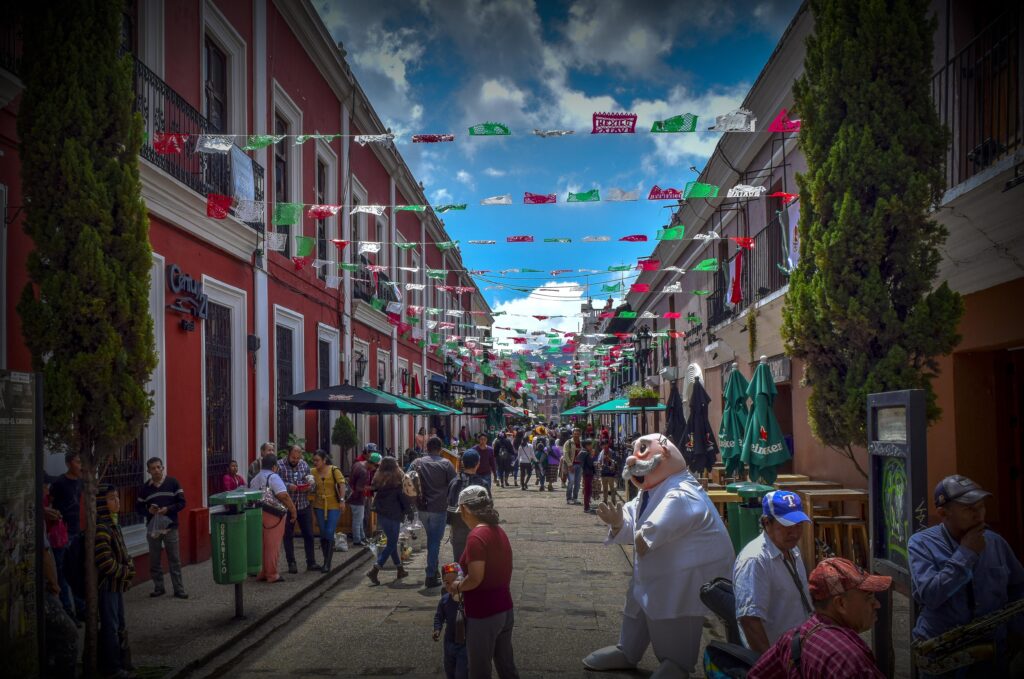
Mexico City is one of the largest and most influential cities in the world. As the capital of Mexico, it serves as the country’s main center for government, business, media, and culture. With a population of nearly nine million people in the city itself and more than twenty million in the greater metropolitan area, Mexico City is a true megacity. Despite its size, many residents and expatriates are drawn to the city because of its affordable cost of living, rich cultural life, and endless opportunities for entertainment and employment.
Daily Life in Mexico City
The city is known for its contrast between modern neighborhoods and historic areas, where luxury buildings can exist just blocks from lower‑income communities. Choosing the right neighborhood is important; safety and cost can vary from one another. Challenges such as unemployment and inequality exist, but the city remains an important destination for locals and foreign residents
For expatriates, learning Spanish is an important part of daily life. Although English is commonly spoken in professional and business settings, a basic understanding of Spanish greatly improves communication and helps people feel more connected to local culture. The Spanish spoken in Mexico City has its own style and vocabulary, but it is generally easy to understand for those familiar with the language.
Cost of Living and Housing
Utilities such as water, electricity, and garbage services are also reasonably priced. However, lifestyle choices matter: living in upscale neighborhoods or shopping at luxury malls can increase expenses. Overall, many residents can live comfortably by using public transport and shopping locally.
One appealing aspect of life in Mexico City is its low cost of living compared to other major global cities. Renting a one‑bedroom apartment in the city center generally costs less than similar housing in cities such as New York or London. Living outside the city center can be even more affordable. Public transportation is inexpensive, groceries from local markets are budget‑friendly, and meals at neighborhood restaurants are widely accessible to residents at many income levels.
Transportation and Infrastructure
Transportation is one of the biggest challenges of life in Mexico City. Heavy traffic makes commuting by car slow and frustrating, and congestion is a daily issue for many residents. To address pollution and traffic, the city enforces Hoy No Circula, a program that limits vehicle use based on license plate numbers. This policy has helped reduce pollution levels over time.
Mexico City also has an extensive public transportation system, including a large metro network, buses, and the Metrobus system. These options are affordable and commonly used. Another popular form of transportation is the pesero, or shared minibus, which operates on fixed routes. While inexpensive and widely used, peseros can be less safe than other transit options.
Health, Safety, and Environment
Mexico City offers access to high‑quality healthcare, particularly in private hospitals and clinics, which are considered some of the best in the country. However, air pollution is a major concern. The city’s high altitude and surrounding mountains contribute to smog, which can be difficult for individuals with respiratory conditions. Air quality has improved since the 1990s, but it remains an issue for many residents.
Crime is another concern, as Mexico City has a reputation for high levels of street crime. While violent crime does occur, foreigners are not typically targeted more than locals. Safety often depends on location and awareness, making neighborhood choice and personal precautions especially important for residents.
Culture and Entertainment
Despite its challenges, Mexico City offers endless cultural and entertainment opportunities. The city hosts numerous festivals influenced by both Indigenous and Catholic traditions, as well as museums, sporting events, markets, and historic landmarks. Whether residents enjoy food, history, music, or sports, Mexico City provides something for nearly every interest, making life in the city vibrant and exciting.
To learn more about Mexico City’s life, check out: internations.org